Home / Guides / How to get rid of it / Where to donate furniture
Where to donate furniture, and how to get it accepted
Donate furniture to a charity thrift store, a furniture bank, a shelter or a community swap group, and check each one's own site for what it is taking now. Most look for clean, sturdy, complete pieces that can go back on a sales floor or into a home without repair.
Book online, and we will give you a call shortly.
Where to donate
You have more options than you might think. Places people take furniture themselves include The Salvation Army, Habitat for Humanity ReStore, St. Vincent de Paul, church thrift shops, furniture banks that furnish homes for families in need, shelters and refugee support groups, and neighborhood swap and free groups online. Each sets its own rules, hours and pickup options, so read its site or call first.
Get it gone
Furniture too heavy for the car? Text a photo and we confirm the price before we lift anything.
What charities usually look for
This is general guidance, not any one charity's rules. A piece is likely to be accepted when it is:
- Clean: no stains, no pet hair, no smell of smoke or mildew
- Sturdy: no wobble, no cracked legs, no loose joints
- Complete: shelves, drawer pulls, legs, cushions and hardware all there
- Working: drawers slide, doors close, recliners recline
- Free of tears in upholstery or peeling on the finish
- A size and style that fits in a home: dressers, nightstands, dining sets, bookcases, desks and small sofas tend to move faster than very large or very old pieces
Pieces that often get turned away: sofas with stains or rips, particleboard that has swelled from water, cribs and children's furniture with missing hardware, very large sectionals and entertainment centers built around old tube TVs, and used mattresses.
Questions to ask before you drop off
- Are you taking furniture right now, and which kinds?
- Do you need photos before I bring it in?
- Do upholstered pieces need anything special, like a tag or a cleaning?
- Is there a drop-off door or a loading area for large items?
- Will someone help unload, or should I bring a second person?
- Do you offer pickup, and does the driver come inside?
Asking these first saves a wasted trip with a sofa strapped to the roof.
How to get a piece ready
- Empty it. Check every drawer and under every cushion.
- Vacuum upholstery and wipe hard surfaces. Use a lint roller for pet hair.
- Tighten loose screws and tape any glass so it does not shift.
- Put small hardware, shelf pins and legs in a zip bag and tape it to the piece.
- Take a few clear photos in good light. Some charities and swap groups ask for them before they agree to take a piece.
- Measure it and your doorways, so you know it will come out the way it went in.
Donating garden tools and electronics
Garden tools in working order can go to a thrift store, a community garden or a tool lending group; ask first. Clean the soil off, oil the blades and bundle long handles with tape. Working electronics can be donated once you have wiped your data, but old TVs and monitors that do not work go to an e-waste recycler, because California bans TVs, monitors and computers from the trash.
California bans TVs, monitors and computers from the trash.
CalRecycle, confirmed 29 September 2026.
Donating furniture with free pickup
Some charities send a truck for larger pieces. Ask the charity directly whether it picks up at your address, whether the driver comes inside or only takes items from the curb, and what happens if the driver decides a piece is not in good enough shape. Our guide to scheduling a charity pickup or booking a crew walks through that choice.
What to do with what is turned down
Not every piece will be accepted, and that is fine. Metal frames can go to scrap, and solid wood can sometimes be recycled. A crew can take what the charity left behind together with anything else you are clearing. Before you give up on a piece, try a neighborhood free group: a dresser with a scratched top or a table that needs refinishing is often exactly what someone handy is looking for.
When to call us
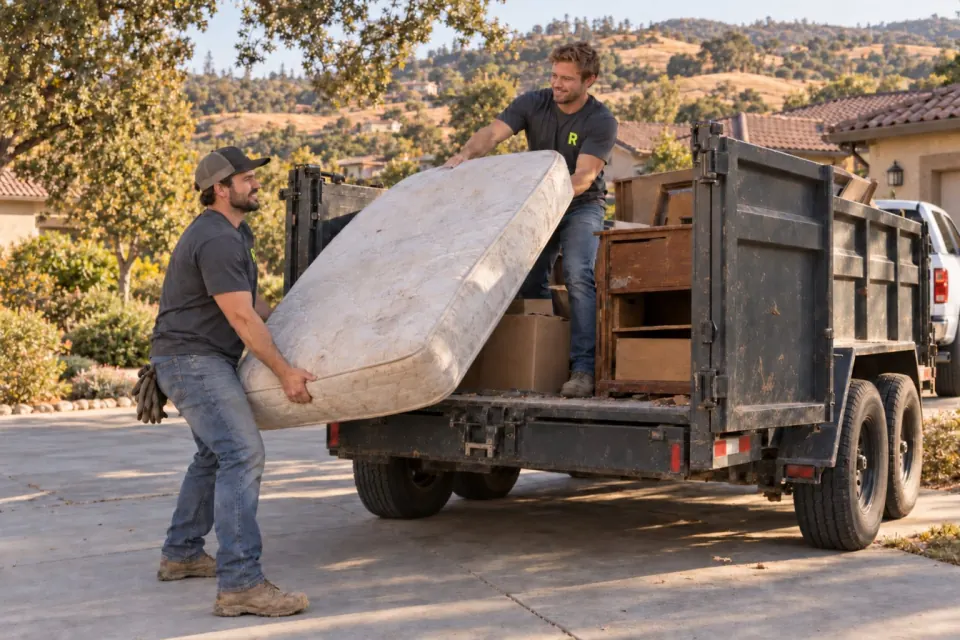
Call Reliable Junk Removal when the furniture is heavy or upstairs, when there are several pieces, or when you have a mix of good furniture and plain junk. A crew of two carries everything out, protects your floors and door frames, takes big pieces apart, and sorts the load: Donate. Recycle. Dump. Pieces with life left go to donation first.
Pricing goes by truck space. A 3 cushion sofa takes about 50 cubic feet, a dresser about 30, a dining table about 30 and each dining chair about 5. A single piece is single-item price: to confirm. See the price calculator. Book online, and we will give you a call shortly.
Furniture removal pages
Questions people ask
Where can I donate furniture?
Charity thrift stores such as The Salvation Army, Habitat for Humanity ReStore and St. Vincent de Paul, plus furniture banks, shelters and community swap groups. Check each one's site for what it takes.
Will a charity take a sofa with a stain?
Usually not. Stains, rips and pet hair are common reasons upholstered pieces get turned away.
Can I donate a used mattress?
It is hard in most places. A clean one in good shape may be accepted; most used mattresses go to recycling. See mattress removal.
Do charities pick up furniture for free?
Some do. Ask the charity directly about pickup at your address and what the driver will carry.
What happens to pieces you take?
Anything with life left goes to donation, then recycling, and only what is left goes to a transfer station.