Home / Services / Commercial and property management / Restaurant equipment removal
Restaurant equipment removal, after your pros disconnect it
Closing, refitting or replacing equipment? Once a plumber, electrician or refrigeration tech has disconnected it, we carry out fryers, ranges, coolers, steel tables and shelving and haul them away.
Book online, and we will give you a call shortly.

What we take from a restaurant
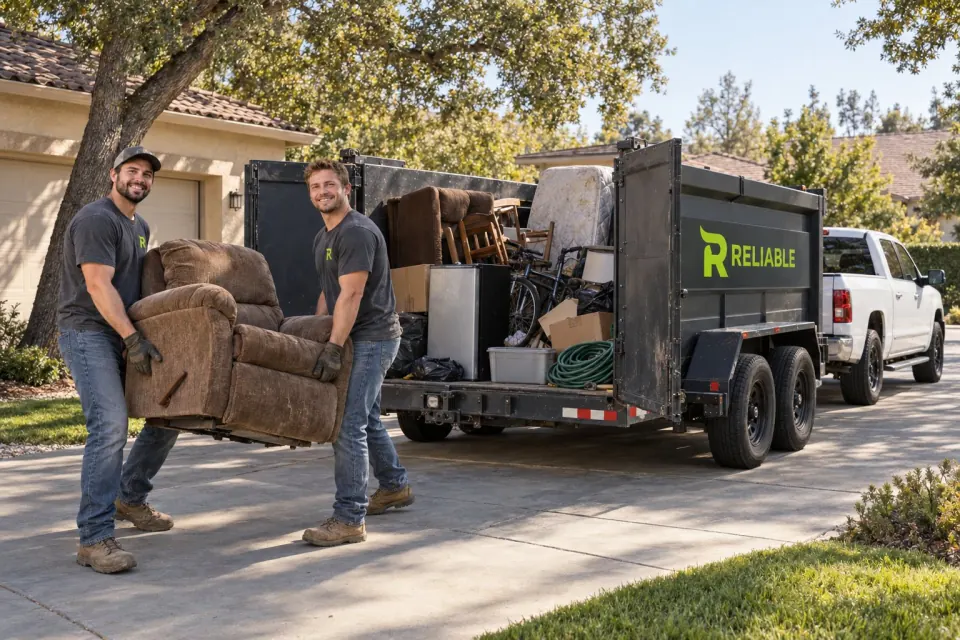
Commercial kitchens are full of heavy, awkward steel: ranges, fryers, ovens, prep tables, sinks, reach-in coolers, ice machines and wire shelving. The dining room adds tables, chairs, booths and bar stools. A crew of two carries it out, protects floors and door frames, takes apart what has to come apart to fit through the door, and loads the truck.
- Ranges, ovens, fryers and griddles
- Reach-in coolers, freezers and ice machines
- Stainless prep tables, sinks and wire shelving
- Dining tables, chairs, booths and bar stools
- Small appliances, smallwares and old signage
- Back-room boxes and broken equipment
Get it gone
Send photos of each piece once it is disconnected. We confirm the price and carry it all out.
Disconnection comes first
We do not disconnect gas lines. A plumber or the gas company does that before we arrive. The same goes for anything hard-wired, plumbed in or tied into a refrigeration system: have your own trades disconnect and cap it, and we take it from there. Equipment still connected on the day stays put until your pros have finished.
Grease and refrigerant
Fryers and grease traps hold oil. Drain the fryers and have the used oil collected the way you normally do before we come. Equipment that has been drained and wiped down is lighter, less slippery on the carry and kinder to your floors.
Coolers, freezers, ice machines and anything else with refrigerant carry a refrigerant fee: to confirm add-on each, because refrigerant needs extra handling when the unit is recycled. For a single household-size unit, see refrigerator removal or freezer removal.
Before we come
- Have gas, water and power disconnected by your plumber, electrician or the gas company.
- Drain the fryers and have the used oil collected through your usual service.
- Empty coolers and freezers and prop the doors open so they dry out.
- Clear the path from the kitchen to the door, and tell your landlord when we are coming.
- Send photos of each piece and where it sits for a price.
Where it goes
Commercial kitchen equipment is mostly stainless steel and other metal, so most of it goes to scrap recycling. Tables, chairs and working pieces with life left can go to donation. Refrigerated units go to recycling with their add-on. Only what is left goes to a transfer station or landfill. Donate. Recycle. Dump.
What restaurant equipment removal costs
We price by how much of the truck the job fills. One range or one cooler can be a single item at single-item price: to confirm, plus refrigerant fee: to confirm for the cooler. A kitchen line with prep tables can be a half truck at half-truck price: to confirm, and a full closing, kitchen and dining room, is often a full truck at full-truck price: to confirm or more. For scale, a household range takes about 30 cubic feet of truck space and a household refrigerator about 60; commercial units run bigger.
Labor, loading, hauling and disposal are in the price, and we confirm it before we lift anything. See how pricing works, try the calculator or read about commercial junk removal.
Related equipment and cleanouts
Questions people ask
Do you disconnect the equipment?
No. We do not disconnect gas lines, and anything wired or plumbed needs your plumber, electrician or refrigeration tech first. We take it from there.
What do we do with the fryer oil?
Drain the fryers and have the oil collected the way you normally do before we arrive.
Can you take the dining room too?
Yes. Tables, chairs, booths, bar stools and decor. Booths fixed to the floor need to be unbolted, or tell us so we plan for it.
Can you come when we are closed?
We work 7 am to 7 pm, 7 days, so a closed day or an early morning works.
How soon can you come after the equipment is disconnected?
Often within a day or two of your trades finishing. Book once you know the disconnect date. Book online, and we will give you a call shortly.