Home / Services / Residential junk removal / Shed removal
Shed demolition and removal, contents and all
Metal, wood or a resin kit shed that never sat square: we empty it, take it down and haul off every piece.
Book online, and we will give you a call shortly.

What shed demolition and removal involves
Shed demolition and removal is two jobs in one visit: clearing out what is inside, then taking the shed itself down and hauling it away. A crew of two does both. Taking apart big pieces is part of the job, so you do not pay for a second trip or hire anyone else to knock it down first.
How we take it down depends on what it is made of. Metal sheds unbolt into panels and stack flat. Resin and plastic kit sheds come apart at the clips and seams. Wood sheds come down wall by wall, roof first, and the framing is cut into lengths that load cleanly. For a bigger outbuilding on open ground, we can bring the heavy-duty setup with a skid loader and a mini excavator; see shed demolition and light demolition for those jobs.
- Metal, wood, resin and plastic garden sheds
- Wood floors, skids and the rotted plywood under them
- Shelving, workbenches and everything stored inside
- Lean-tos, small playhouses and kit greenhouses
- Brush and vines growing over the shed, hauled to green waste
If there is a concrete slab or pavers under the shed, tell us when you book. Concrete is a dense load, so it is priced by weight on site, and our concrete removal page explains how that works.
Get it gone
Send a photo of the shed and the path to it. We confirm a price, take it down and haul it off.
Before we come
- Take out anything you want to keep. We haul the rest with the shed.
- If power runs to the shed, have an electrician make it safe before the visit.
- Measure the gate or side yard so we know how the panels will come out.
- Point out sprinkler heads, plants and fences near the shed that need to stay as they are.
- Pull fuel cans, paint and garden chemicals out of the shed. We'll haul anything but paint and solvents, fuel and oil, chemicals and pesticides, propane tanks, asbestos, medical waste and ammunition; we tell you where those go instead.
Where an old shed goes
We sort a shed the same way we sort everything: Donate. Recycle. Dump. Tools, mowers, bikes and garden gear from inside the shed often have life left, and they go to donation. Metal sheds and metal shelving go to scrap. Brush, vines and branches cleared from around the shed go to green waste composting. Painted siding, roofing and rotted wood that cannot be reused go to a transfer station or landfill.
What shed removal costs
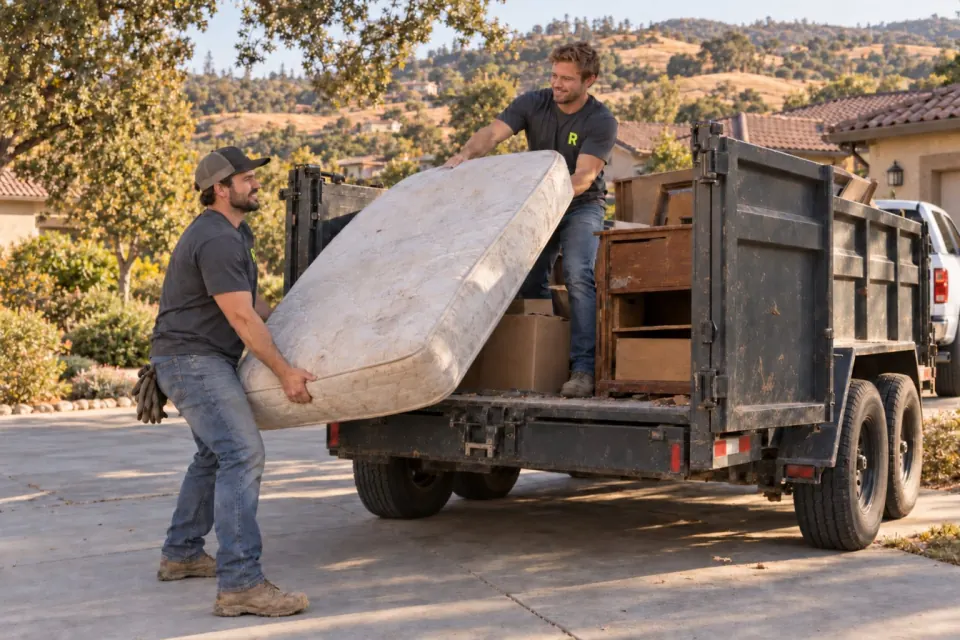
A tool shed takes about 120 cubic feet of truck space on the moving-industry cube sheet, before you count what is stored in it. Most single sheds with light contents fall in the quarter truck tier at quarter-truck price: to confirm or the half truck at half-truck price: to confirm. A large wood shed packed with stuff can run to three quarters at three-quarter-truck price: to confirm or more. Any slab or pavers are priced by weight on site.
Taking the shed down, loading, hauling and disposal are all in the price, and you approve that price before a panel comes off. Use the calculator for the contents, and see heavy item removal for sheds alongside hot tubs and pianos. Book online, and we will give you a call shortly.
Other outdoor take-downs
Questions people ask
Do I need a permit to take down my shed?
We cannot tell you your city's rules, and we do not guess. If you are not sure, check with your city or county before the visit.
What happens to the concrete slab?
Tell us about it when you book. Concrete is a dense load priced by weight on site, and we confirm that price before we start.
Can you take the shed but leave what is inside?
Yes. Move your things out first, or tell us what stays and we set it aside before we take the shed down.
Do I need to be home?
Be there at the start to show us what stays and where the gate is. After that, you do not need to watch.
What about old fuel and weed killer in the shed?
We'll haul anything but paint and solvents, fuel and oil, chemicals and pesticides, propane tanks, asbestos, medical waste and ammunition; we tell you where those go instead.